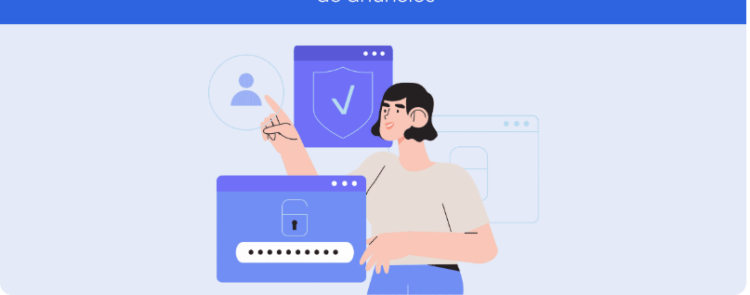
With the General Data Protection Law (LGPD) which came into force in Brazil in September 2020, Privacy Policy has gained more prominence in companies and has become a fundamental document for marketing and sales strategies, whether online or offline.
For example, have you noticed that when creating an account on a certain site or registering in a form, it is normal to have a field requesting communication consent and a link directing to the Privacy Policy page?
These actions, which were not always a concern for companies, have become part of LGPD regulations that define how to collect, store, treat, and collect personal data of leads and customers.
Therefore, as digital marketing must go hand in hand with LGPD, we have prepared this article to tell you everything you need to know about the Privacy Policy and other points that interfere with your strategies. Follow along.
What are Privacy Policies
The Privacy Policies are actually not new to most organizations that were already concerned with data protection even before LGPD came into force.
Most of the time, this document is even available on the website or presented to the visitor when they register, inviting them to read the rules before making a conversion.
But what should this document exactly contain? Simple, the Privacy Policy is responsible for clarifying how companies capture, store, use, and protect the data of their contacts.
In other words, it is a record of all the practices adopted to maintain the security of information from website users, leads, and customers, such as navigation data, name, CPF/CNPJ, phone, address, and many others.
By making this document accessible and easy to understand, organizations follow the principle of transparency and at the same time avoid possible legal penalties.
How the Privacy Policy affects your digital marketing strategies
As we mentioned before, for those working with digital marketing, adapting to the LGPD is essential. One of the most important steps is to have a Privacy Policy page on the website that is clear in informing how the company handles customer and lead data.
Thus, the marketing and sales teams need to align with the company’s legal department both to draft the document and to ensure that acquisition and relationship actions comply with the rules.
Next, you will find the details of how the LGPD relates to Inbound Marketing strategies and ad campaigns.
Relationship between LGPD and Inbound Marketing
If you’re working with an Inbound Marketing strategy, it’s important to adapt your actions to the law and have a Privacy Policy that informs about how the data is collected and processed:
Among the main points that should be addressed in the document we have:
- what data is collected and the sources of collection,
- what these data are used for,
- where they are stored and for how long,
- use of cookies and navigation data,
- what security measures the company adopts to ensure data protection,
- with whom these data are shared, among others.
These are just some examples of information. After all, being a very complete and specific document that also protects the company itself, Privacy Policies should be drafted based on legal consultancy.
Furthermore, when we talk about the practical part, there are actions necessary for those who wish to capture and relate with leadscustomers, such as:
- defining the legal basis for data usage. For example, consent that allows maintaining contact with the lead can be requested through a checkbox in forms,
- sending emails or other forms of contact only with leads that have this legal basis, ensuring they agree to receive communications.
- in no way buy email lists or force communication with leads that do not wish to receive your content.
Always remember that the proposal of Inbound Marketing is to build a relationship with people who are interested in this bond. In other words, adapting to LGDP comes as a way to reinforce the good practices that are already part of the methodology.
Privacy Policy and ads
But how do LGPD and Privacy Policy influence ads broadcasted on social media?
First of all, it’s necessary to align with the platform where your campaigns will run to avoid any blocking or penalties for not respecting the channel’s terms of use.
Then, it’s essential to pay attention to the type of ad you will create. As you know, each campaign promotes interaction with the user, such as audience engagement, increased website traffic, and conversions.
However, there are some models that require special care when it comes to Privacy Policy. Below you will find two examples we selected and how to adapt.
Capture with Lead Ads campaigns
One of the biggest benefits of advertising on social networks like Facebook and LinkedIn is the ability to create Lead Ads campaigns focused on capturing new contacts at all funnel stages.
However, to be able to run a registration form within the platform itself, it is essential to have a Privacy Policy page to inform users about data processing.
Additionally, this document should be located on a page of your website or another easily accessible link, as channels do not usually accept PDF files or images.
Remarketing campaigns
As for conducting remarketing campaigns aimed at re-engaging users who have already accessed your site or app, it’s necessary:
- to describe in the Privacy Policy how this strategy is used,
- that third-party providers like Google Ads use partner sites to display ads
- and that these providers also use cookies to track previous visits to the site or app and deliver these ads.
In fact, the cookie notice is crucial to maintain the principle of transparency since browsing data can be captured even without the visitor knowing it happened.
Phew, we’ve reached the end. You can see that the Privacy Policy and LGPD have many details, but it’s not a monster with seven heads, is it?
Just pay a lot of attention to how data is handled, make this clear to the website user, lead, or customer and adapt your strategies to continue generating relevant results.
Did you manage to clear up your doubts about Privacy Policy? Then don’t forget to share this article with other marketing and sales professionals who are interested in the subject.